Monday, July 7, 2025

Advanced Prompt Engineering: Unlocking the Full Potential of Generative AI


Advanced Prompt Engineering: Unlocking the Full Potential of Generative AI


Introduction

The rapid rise of generative AI has transformed the digital landscape, with language models like GPT, Claude, and Gemini reshaping how we interact with machines. These models can generate text, write code, create images, answer questions, and more. Yet, the power of these tools is only as good as the instructions we give them—known as prompts.

Welcome to the realm of Advanced Prompt Engineering, where crafting the right prompts is a skill, a science, and an art form. While basic prompting involves simple instructions, advanced prompt engineering uses context, structure, role-playing, memory, and optimization techniques to maximize the performance of AI systems.

In this comprehensive guide, we explore the strategies, frameworks, tools, and real-world use cases that define advanced prompt engineering—a foundational skill for the future of AI.


1. What Is Prompt Engineering?

Prompt engineering is the practice of designing effective prompts to guide the output of large language models (LLMs). A prompt is any input given to an AI model to produce a response.

Why It Matters:

  • The quality of output depends heavily on the prompt.
  • It enables control over tone, format, length, and structure.
  • Critical for domains like education, coding, law, marketing, and medicine.

2. Evolution of Prompting: From Simple to Sophisticated

Prompt engineering has evolved as models have grown more capable.

Era Prompt Type Description
Pre-2020 Simple Queries “What is the capital of France?”
2020–2022 Few-shot Learning Providing examples for guidance
2023+ Chain-of-Thought, Role-play, Agents Multi-step reasoning and advanced interactions

3. Core Principles of Advanced Prompt Engineering

A. Clarity and Precision

The AI performs best when instructions are clear, specific, and structured.

  • ✅ Good: "Summarize the following article in 3 bullet points."
  • ❌ Bad: "Tell me what this is about."

B. Contextualization

Adding context improves relevance and accuracy.

  • Include background information, goals, format expectations, and examples.

C. Iterative Refinement

Prompting is rarely perfect the first time. Iteration helps refine output.

  • Use A/B testing or prompt chains to compare responses.

D. Modularity

Break tasks into components and chain them for better accuracy and control.

4. Prompt Engineering Techniques

Let’s dive into advanced methods used by professionals and AI researchers:

A. Role-Based Prompting

Ask the AI to act as an expert or persona:

  • “Act as a cybersecurity analyst. Explain how to prevent phishing attacks.”
  • “Pretend you're a children's book author. Write a story about kindness.”

This technique taps into model's ability to mimic expertise and styles.

B. Chain-of-Thought (CoT) Prompting

Encourages step-by-step reasoning before giving the final answer:

  • Prompt: “Solve this math problem step-by-step: What is 15% of 240?”
  • Model: “First, convert 15% to a decimal = 0.15. Then multiply 0.15 × 240 = 36.”

Especially powerful in logic-heavy tasks like math, programming, and diagnostics.

C. Few-shot Prompting

Provide a few examples before asking the model to complete the task.

Translate English to French:
1. Hello → Bonjour
2. Thank you → Merci
3. Goodbye → ?

Few-shot examples condition the model on the desired format and tone.

D. Zero-shot Prompting

Used when no example is provided, but a precise instruction is given:

  • “Write a haiku about springtime.”

Modern models like GPT-4 and Claude 3 perform well in zero-shot settings.

E. Prompt Chaining

Use outputs from one prompt as input for another in a multi-step pipeline.

  1. Step 1: Generate a topic.
  2. Step 2: Research the topic.
  3. Step 3: Generate an article outline.
  4. Step 4: Write the article.

Frameworks like LangChain enable complex prompt chains in production.

F. Tree-of-Thought (ToT)

Inspired by human brainstorming, the model explores multiple branches of reasoning before deciding on the best path. Useful in problem-solving or creative writing.

G. Self-Consistency Prompting

Instead of relying on a single answer, generate multiple outputs and select the best. Improves reliability and robustness.

5. Structure of a Powerful Prompt

A well-designed prompt includes:

  1. Instruction – What to do.
  2. Context – Relevant background info.
  3. Format – Desired style or output form.
  4. Examples – (optional) Few-shot inputs.
  5. Constraints – Word limits, tone, perspective.

Example Prompt:

“You are an expert historian. Write a 150-word summary of the fall of the Roman Empire, using simple language for a 10-year-old reader.”

6. Tools for Prompt Engineering

A. Prompt Testing Platforms

  • OpenAI Playground
  • Anthropic Console
  • PromptPerfect
  • FlowGPT
  • LangChain + LLMHub

B. Version Control

Just like code, prompts should be versioned and tested. Use tools like:

  • GitHub
  • PromptLayer
  • Weights & Biases

C. Visual Prompt Builders

Low-code tools for building interactive prompts:

  • Replit
  • Parea
  • Promptable

7. Use Cases of Advanced Prompt Engineering

A. Content Creation

  • Write SEO-optimized blog posts
  • Generate social media captions
  • Draft product descriptions

B. Education

  • Create quizzes and flashcards
  • Explain complex topics in simple terms
  • Translate and localize learning content

C. Healthcare

  • Summarize clinical documents
  • Create patient instructions
  • Generate synthetic data for research

D. Law

  • Draft legal contracts
  • Analyze case law
  • Generate compliance checklists

E. Code Generation

  • Ask AI to write, explain, or debug code
  • Build DevOps scripts and API docs

8. Metrics and Evaluation

Evaluating prompt quality is key for improving performance.

Evaluation Metrics:

  • Accuracy: How well the response matches the prompt.
  • Completeness: Does it cover all requested aspects?
  • Fluency: Is the response grammatically and stylistically sound?
  • Factuality: Especially critical in technical domains.
  • Relevance: How well it adheres to context.

Evaluation Methods:

  • Manual review
  • User feedback
  • Automated grading using another model
  • A/B Testing

9. Common Prompting Pitfalls

Avoid these mistakes for better results:

Mistake Fix
Vague instructions Be precise and structured
Overloading a single prompt Use chaining or modular steps
Ignoring context Add background for better relevance
Over-trusting AI Always validate critical output

10. Prompt Engineering in Multi-Modal and Agentic AI

Prompting isn’t limited to text anymore. Multi-modal prompting includes:

  • Text + Image input (e.g., GPT-4o, Gemini 1.5)
  • Voice and video instructions
  • GUI-based interactions

AI Agents and Prompt Programming:

  • Agentic systems like Auto-GPT, LangChain Agents, and OpenAI's function calling use prompts to simulate multi-step decision-making and tool use.
  • Prompts become function calls, memory retrieval cues, or autonomous task instructions.

11. The Future of Prompt Engineering

A. Natural Language Programming

Prompts will evolve into natural language programs—modular, reusable instructions that behave like code.

B. Prompt-to-App Interfaces

Users can build applications just by prompting. No-code and low-code ecosystems will merge with LLMs.

C. AI-Augmented Prompt Creation

AI will help design better prompts using meta-learning and prompt tuning.

D. Personalized Prompting

Systems will learn from your previous prompts, preferences, and context to auto-generate better instructions.

12. Advanced Prompt Frameworks and Templates

A. The RACE Framework

  • Role: Define AI’s persona
  • Audience: Who is it speaking to?
  • Context: What background info is needed?
  • Execution: Output format and style

B. REACT (Reasoning + Acting)

Combines rational steps and tool use:

Thought → Action → Observation → Final Answer

Ideal for building autonomous agents and interactive bots.

13. Case Study: Improving Legal Document Drafting

Initial Prompt:

“Write a rental agreement between landlord and tenant.”

Improved Prompt Using Advanced Engineering:

“You are a contract lawyer. Draft a simple rental agreement for an apartment in New York between John Doe (landlord) and Jane Smith (tenant) for 12 months, including rent amount, deposit, late fees, and termination terms. Output in professional contract language and bullet-point format.”

Result:

  • More accurate
  • Legally relevant
  • Easier to review

Conclusion

Advanced Prompt Engineering is not just a technical skill—it’s a strategic superpower in the age of AI. As large language models continue to grow in scale and intelligence, the ability to control and direct their output through well-crafted prompts becomes crucial.

Whether you’re a content creator, educator, software developer, researcher, or business leader, learning how to build effective prompts will help you get the most out of generative AI.

By mastering clarity, structure, role-play, chaining, and evaluation, you can harness the true creative and cognitive potential of modern AI systems.

Sunday, July 6, 2025

Artificial Intelligence vs. Machine Learning


Artificial Intelligence vs. Machine Learning: Understanding the Differences and Applications

Artificial intelligence versus Machine learning


Artificial intelligence and machine learning are everywhere today. They’re changing how we work, communicate, and even live. But many people get confused about what really sets them apart. Are they the same thing? Or are they different? Understanding these terms helps us see how technology shapes our future. From healthcare breakthroughs to self-driving cars, AI and machine learning are making a big impact. Let’s explore their definitions, how they differ, and how they’re used in real life.

What is Artificial Intelligence?

Definition and Core Concepts

Artificial intelligence, or AI, is the science of creating computers or machines that can do tasks that normally need human thinking. These tasks include understanding language, recognizing objects, or making decisions. Think of AI as the big umbrella that covers all efforts to mimic human smarts. It’s not just one thing but a broad set of ideas aimed at building intelligent systems.

AI can be broken down into two types: narrow AI and general AI. Narrow AI is designed for specific jobs, like voice assistants or spam filters. General AI, which still remains a goal, would think and learn like a human, able to do anything a person can do.

Historical Development

AI’s journey started back in the 1950s with simple programs that played checkers or solved math problems. Over time, breakthroughs like IBM’s Deep Blue beating a chess champion in the 1990s marked milestones. Later, Watson’s victory on Jeopardy and today’s advanced models like GPT-4 have pushed AI forward. Each step is a move to make machines smarter.

Types of AI

There are several kinds of AI, each suited for different tasks:

  • Reactive Machines – Basic systems using only current info, like old chess computers.
  • Limited Memory – Can learn from past data, which helps self-driving cars decide what to do next.
  • Theory of Mind – Future AI that could understand people’s emotions and thoughts.
  • Self-Aware AI – Machines with consciousness—still a long-term goal, not here yet.

What Is Machine Learning?

Definition and Principles

Machine learning (ML) is a branch of AI focused on building systems that learn from data. Instead of following fixed rules, these systems improve over time through training. Think of it like teaching a child: show it many examples, and it learns to recognize patterns or make decisions. The key steps involve training the model, testing it, and then refining it to improve accuracy.

Types of Machine Learning

Machine learning comes in three main types:

  • Supervised Learning – The system is trained on labeled data. For example, giving a program pictures of cats and dogs so it learns to tell them apart.
  • Unsupervised Learning – No labels are provided. The system finds patterns on its own, like grouping customers by shopping habits.
  • Reinforcement Learning – Learning through trial and error, rewarded for correct actions, such as game-playing AI that improves by winning or losing.

How Machine Learning Works

The process involves several steps:

  1. Collect data – Gather info that relates to the problem.
  2. Extract features – Pick the important parts of the data.
  3. Train the model – Use data to teach the system how to recognize patterns.
  4. Test and evaluate – Check how well the model performs on new data.
  5. Refine – Improve the system based on results.

Key Differences Between Artificial Intelligence and Machine Learning

Scope and Objectives

AI is the broader goal of making machines smart enough to do human-like tasks. Machine learning is just one way to reach that goal. It specifically involves making systems that learn from data. So, not all AI uses machine learning, but all machine learning is part of AI.

Techniques and Algorithms

Some AI systems rely on rules and logic—like coding a robot to follow steps explicitly. These are traditional expert or rule-based systems. In contrast, machine learning uses algorithms such as decision trees and neural networks that adapt and improve through data.

Dependency and Data

Machine learning depends heavily on large amounts of data to train models. Without data, it can’t learn. Traditional AI, however, can use symbolic reasoning or pre-programmed rules that don’t need data to function. This difference influences how quickly and accurately systems can adapt or perform.

Practical Implications

AI can include systems that don’t learn but follow fixed instructions. Machine learning always involves learning from data. This makes ML more flexible and better at handling complex, changing environments. It also affects how quickly systems can be developed, their accuracy, and how adaptable they are over time.

Real-World Applications and Examples

Artificial Intelligence in Industry

AI is used in many fields today:

  • Healthcare: AI diagnoses diseases from imaging scans or predicts patient outcomes.
  • Finance: It helps detect fraud or optimize trading strategies.
  • Customer Service: Chatbots offer quick responses, and virtual assistants like Siri or Alexa help with daily tasks.

Machine Learning in Action

ML powers many recent innovations:

  • E-commerce: Recommendation engines suggest products based on your browsing history.
  • Autonomous Vehicles: ML enables self-driving cars to recognize objects and make decisions on the road.
  • Natural Language Processing: From language translation to sentiment analysis, ML helps machines understand and respond to human language.

Case Studies

  • IBM’s Watson used AI to assist in cancer treatment, analyzing thousands of medical records for personalized care.
  • Google’s DeepMind created AlphaGo, which beat top human players in the ancient game of Go, showcasing ML’s advanced learning capabilities.

Challenges and Ethical Considerations

Technical Challenges

Building AI and ML systems isn’t easy. They need high-quality data, which can be biased or incomplete. Interpreting how models make decisions is often hard, even for experts. This “black box” problem raises concerns.

Ethical Issues

Data privacy is a major worry. Many AI systems collect sensitive data, risking misuse. Bias in data can lead to unfair or harmful decisions. Developing responsible AI involves setting standards and regulations to ensure fairness, transparency, and respect for human rights.

Future Outlook

Researchers focus on making AI more understandable—known as explainable AI. Regulation and ethical guidelines will shape how AI is used, balancing innovation with safety.

Future Trends and Opportunities

Advancements in AI and Machine Learning

As technology progresses, AI will become even more integrated with the Internet of Things (IoT) and edge devices. Deep learning, a powerful ML subset, will continue to improve, enabling smarter applications and new discoveries.

Impact on Jobs and Society

While AI might replace some jobs, it will also create new roles requiring different skills. Preparing for this shift means investing in education and training. Embracing continuous learning is key to staying ahead.

Actionable Tips

Businesses should start small, testing AI tools that solve real problems. Keep learning about new developments because AI evolves quickly. Ethical considerations must be at the center of any AI project.

Conclusion

Understanding the difference between artificial intelligence and machine learning is crucial in today’s tech world. AI aims to create machines that think and act like humans. Machine learning is a way AI systems learn and improve from data. Both are transforming industries and daily life. Staying informed and responsible in developing and using these technologies will shape the future. As these tools grow smarter, so should our approach to ethical, fair, and innovative innovation. Embracing this change positively can lead to incredible opportunities for everyone.

Enhancing LLM Accuracy in Radiology Question Answering Through Real-Time Domain


Enhancing LLM Accuracy in Radiology Question Answering Through Real-Time Domain-Specific Data Integration

LLM Accuracy in Radiology


Radiology is changing fast. New studies, updated guidelines, and advanced imaging tools appear all the time. Large Language Models (LLMs) are becoming key tools for radiologists. They help interpret reports, answer questions, and support diagnoses. But to truly succeed, these models need to stay updated with the latest, specific information. Integrating real-time, domain-specific data is the way forward.

The Current Landscape of LLMs in Radiology

Capabilities and Limitations of LLMs

Today’s top LLMs, like GPT-4, can understand and generate medical text quite well. They answer questions, summarize reports, and help in diagnostic workflows. However, they still face big hurdles. One is data staleness — models trained on old data can provide outdated advice. They also tend to hallucinate, making up facts when unsure. Plus, they often lack deep, domain-specific knowledge needed for radiology. This weakness can cause errors that matter in real patient cases.

Existing Radiology AI Tools and Performance

Many AI tools now help with image analysis, often claiming high accuracy. For example, some FDA-approved software can identify tumors or fractures with near-human precision. Still, these tools mainly focus on image processing, not language-based Q&A. When it comes to radiology reports and clinical questions, AI accuracy varies. Recent studies show that relying only on static data can limit performance and result in missed nuances.

Challenges in Ensuring Accurate Radiology Q&A

One core issue is data heterogeneity. Medical records, imaging reports, and images come from different sources and formats. Interpreting these correctly isn't simple. Moreover, radiology knowledge is always changing. New research, updated protocols, and emerging diseases make keeping models current a moving target. So, ensuring high accuracy in a clinical setting is a real challenge.

The Impact of Data Freshness and Domain Specificity on LLM Accuracy

Why Up-to-Date Medical Data Matters

Medical knowledge evolves fast, especially in radiology. Guidelines are frequently updated. For instance, a new method for detecting lung nodules might be introduced. Using outdated info could mean misdiagnoses or missed findings. Staying current prevents these mistakes. It’s like trying to navigate with old maps — inaccurate guidance can lead to wrong turns.

The Power of Domain-Specific Data

Focusing on specialized data matters a lot. When LLMs are trained or fine-tuned with radiology-specific datasets, they gain a deeper understanding. For example, datasets containing thousands of radiology reports improve the model’s ability to interpret complex language and imaging contexts. Studies show this tailored approach boosts accuracy and relevance. It’s like giving the model expert glasses to see finer details.

Real-World Examples of Data-Driven Improvements

Some hospitals have started adding real-time data feeds from their radiology systems. One showed a 15% boost in diagnostic accuracy after continuously updating their LLM with recent imaging data and reports. Another used live clinical guidelines, which helped catch evolving disease patterns faster. These examples prove that real-time, domain-specific data can make a difference.

Strategies for Integrating Real-Time Domain-Specific Data into LLMs

Gathering and Validating Data

Start with trusted sources. Use PACS (Picture Archiving and Communication Systems), medical journals, and clinical trial databases. Regularly check and validate this info to ensure quality. Updating data should be systematic so models stay aligned with the latest standards and research.

Technical Methods for Real-Time Data Flow

APIs are key. They allow LLMs to fetch latest info during Q&A sessions. For example, an API could pull recent guidelines from a trustworthy medical site. Continuous learning models can adapt based on new data inputs. Federated learning enables models to learn from decentralized data sources securely. This setup demands solid infrastructure, with fast servers and secure data pipelines.

Protecting Privacy and Ensuring Compliance

Handling medical data means respecting privacy laws like HIPAA and GDPR. Anonymize patient data before feeding it into models. Use encryption during data transmission. Strong security measures prevent breaches and make sure data remains protected.

Practical Ways to Improve LLM Question Answering in Radiology

Fine-Tuning with Domain Data

Begin with a general LLM and train it further with radiology-specific datasets. Keep updating the model with new reports and research. This helps the model understand common phrases, imaging details, and evolving standards better.

Real-Time Data Retrieval During Q&A

Use systems that fetch relevant data on the fly. When a radiologist asks about a specific condition, the model can pull recent guidelines or reports regarding that disease. Connecting the model to electronic health records and radiology databases makes this possible.

Combining Expert Feedback

Incorporate radiologists' feedback actively. When the model gives an answer, experts can correct or clarify its responses. Use this input to retrain or refine the model continuously. Over time, responses become more precise and trustworthy.

Future Directions and Emerging Technologies

Multi-Modal AI for Better Accuracy

Future AI will combine images, reports, and other data sources for a full picture. Imagine an AI that sees an image and reads its report at the same time. This fused approach can catch details that are missed when data sources are separate.

Ethics and Regulations in Healthcare AI

As AI tools grow smarter, standards must keep pace. Transparency about how AI makes decisions is vital. Clear accountability ensures clinicians trust and rely on these systems safely.

Promising Innovations in Radiology AI

Pilot projects testing real-time data feeds show promising results. Some are exploring live updates from clinical trials or hospital systems. These innovations could make AI more accurate, faster, and more adaptable in any clinical setting.

Conclusion

Improving LLM accuracy in radiology questions hinges on integrating real-time, domain-specific data. Hospitals, AI developers, and researchers must work together to build reliable data pipelines. Using current guidelines, updated reports, and expert feedback will make models more precise. This approach promises better diagnoses, improved patient care, and smoother workflows. Investing in a strong data strategy today unlocks the full potential of AI in radiology. We should focus on continuous updates, secure data handling, and ongoing training to see real progress. The future of radiology AI depends on it.

Thursday, July 3, 2025

Google’s New MUVERA Algorithm Improves Search


Google’s New MUVERA Algorithm Improves Search: A Deep Dive into the Future of Web Discovery

MUVERA Algorithm


Introduction

In the constantly evolving world of search engines, Google continues to lead with innovative technologies that aim to improve user experience and accuracy. One of its latest advancements, the MUVERA algorithm, has caught the attention of SEOs, digital marketers, and technologists alike. MUVERA, an acronym for Multimodal Understanding and Verified Entity Recognition Algorithm, represents Google’s significant leap in enhancing how search engines comprehend content, intent, and context.

This new update promises to provide more precise, reliable, and intelligent search results using AI-powered language models, multimodal data analysis, and entity verification methods. But what exactly is MUVERA? How does it differ from previous algorithms like BERT, MUM, or Hummingbird? And most importantly, what does it mean for users and content creators?

Let’s unpack the MUVERA algorithm, its core innovations, and how it improves the search landscape in 2025 and beyond.

What is MUVERA?

MUVERA stands for Multimodal Understanding and Verified Entity Recognition Algorithm. It is a next-generation AI search framework that aims to:

  • Understand search queries across text, images, videos, and audio (multimodal input).
  • Validate entities mentioned in content using verified knowledge graphs and trusted sources.
  • Apply deep contextual reasoning to return results that better match user intent.
  • Enhance search result reliability by filtering misinformation and untrustworthy sources.

MUVERA builds on Google’s earlier models like:

  • BERT (Bidirectional Encoder Representations from Transformers) — focused on natural language understanding.
  • MUM (Multitask Unified Model) — capable of multitasking across different content formats.
  • RankBrain — used machine learning to better interpret unknown queries.

With MUVERA, Google is combining the strengths of all these models and layering them with verification layers and multimodal processing, something that makes it more intelligent and trustworthy than any previous version.

Key Innovations in MUVERA

1. Multimodal Understanding

MUVERA allows Google to interpret non-text inputs like images, videos, audio clips, and even interactive media in combination with traditional text-based content. For instance:

  • A user searching with a photo of a landmark will receive contextually accurate and verified details, nearby locations, historical context, and even tourism information.
  • Voice or audio snippets can be interpreted using AI speech recognition that connects it with relevant text-based information.

This improves the accessibility and precision of search results and empowers users to search the way they prefer, not just through text.

2. Verified Entity Recognition

MUVERA introduces a verification layer that uses Google’s knowledge graph, Wikipedia, Wikidata, and a network of trusted domains to validate the authenticity of entities mentioned in search results.

For example:

  • Searching for “COVID-25 treatment” will not just show popular articles but verify the sources, check the entity consistency, and flag or downgrade false information.
  • Entities like people, places, products, and historical events are cross-referenced for authenticity.

This feature is designed to fight misinformation, especially in sensitive domains like health, science, finance, and politics.

3. Contextual and Intent-Based Reasoning

Instead of simply matching keywords, MUVERA interprets the semantic intent behind queries.

For instance:

  • A query like “best places to live for remote workers” will consider not just popular cities but also internet speed, cost of living, quality of life, and remote working policies.
  • MUVERA understands nuance, tone, and latent intent, returning richer and more relevant results.

This makes the search engine more like a conversational assistant rather than a keyword matcher.

4. Cross-Lingual and Cultural Adaptation

MUVERA has advanced multilingual capabilities and cultural sensitivity. It doesn’t just translate queries; it interprets them within a local context.

For example:

  • Searching for “street food in India” in French will yield localized results tailored to cultural expectations, location data, and verified guides, not just raw translations.

This makes Google more globally adaptive and inclusive.

How MUVERA Improves Search for Users

1. Higher Accuracy and Trustworthiness

Search results now go through an entity verification layer that drastically reduces misinformation, fake news, and clickbait. Users can trust that the top results have passed through factual and source-based filtering.

2. Better Personalisation Without Privacy Invasion

MUVERA uses on-device learning and federated AI to understand user intent and preferences without directly collecting personal data. It can predict what kind of results you prefer based on anonymous activity while respecting user privacy.

3. Visual and Voice-Based Search Becomes Smarter

Users can now use voice notes, images, or video snippets to conduct rich contextual searches. MUVERA’s ability to process multimodal inputs means users no longer have to frame perfect text-based questions.

4. Improved Featured Snippets and AI Overviews

MUVERA powers more dynamic featured snippets — they now include interactive summaries, verified sources, and even AI-generated Q&A sections tailored to the user’s intent.

Impact on SEO and Content Strategy

MUVERA is a game-changer for SEO professionals, publishers, and content creators. Here’s how:

1. Quality Over Quantity

MUVERA rewards content that is:

  • Fact-checked
  • Cited with credible sources
  • Rich in original insight
  • Formatted for multimodal consumption

Keyword stuffing, duplicate content, or poorly researched articles will suffer demotion.

2. Entity-First Optimization

With entity recognition at the heart of MUVERA, websites must ensure:

  • Proper schema markup
  • Inclusion of named entities (people, organizations, locations)
  • Accurate metadata and source links

Content should align with verified knowledge bases to stand out.

3. Multimodal Content Wins

Brands that embrace images, videos, charts, podcasts, and interactive media will benefit. Text-only content may lose ranking if it lacks diversity in presentation.

4. E-E-A-T is Reinforced

MUVERA strengthens Google’s focus on Experience, Expertise, Authoritativeness, and Trustworthiness (E-E-A-T). Content should:

  • Be authored by experts.
  • Include bios, credentials, or source transparency.
  • Focus on providing value and accuracy.

Examples of MUVERA in Action

Query Pre-MUVERA Result MUVERA Result
“Best cameras under $1000” Blog posts with affiliate links Verified reviews from trusted photography experts, comparison charts, video breakdowns
“What is long COVID?” News articles with varying claims Verified definitions from WHO/CDC, summaries, multilingual explainers
“Show me Tokyo cherry blossom spots” Listicles with no maps Interactive map with dates, photos, directions, user videos

Challenges and Limitations

No algorithm is perfect. Despite its advancements, MUVERA also comes with challenges:

  • Bias in verification sources: Relying on existing knowledge graphs could reinforce institutional bias.
  • Smaller publishers may struggle to compete without verified entities or backlinks from authoritative sources.
  • Over-reliance on AI summaries might reduce user exploration of diverse viewpoints.

However, Google has indicated it is actively addressing these concerns through feedback loops, human review, and local content prioritization.

The Future of Search with MUVERA

MUVERA isn’t just an update — it is a paradigm shift in how humans interact with search engines. It signifies:

  • The end of the keyword era.
  • A move toward verified, contextual discovery.
  • A world where every format is searchable — from voice to visual.

As we step into an AI-native search age, Google’s MUVERA may define how trust, truth, and technology intersect.

Conclusion

Google’s MUVERA algorithm marks a major evolution in the way search engines understand and deliver information. By combining AI-powered multimodal understanding, entity verification, and deep contextual awareness, it addresses many of the challenges of misinformation, keyword over-optimization, and limited input modes.

For users, it means more reliable, intuitive, and diverse search experiences. For creators and SEOs, it’s a call to create genuine, credible, and multimedia-rich content.

MUVERA isn’t just about search — it’s about transforming the digital knowledge ecosystem for the better.

Visit my other blogs :

To read about Artificial intelligence Machine  Learning  NLP 

visit 

http://technologiesinternetz.blogspot.com 

To read about technology internet programming language food recipe and others 

visit 

https://techinternetz.blogspot.com 

To read about spiritual enlightenment religion festivals 

visit 

https://navdurganavratri.blogspot.com


Tuesday, July 1, 2025

How to Scale White Label Link Building Without Killing Quality


How to Scale White Label Link Building Without Killing Quality

White label link building


Introduction

In the fast-paced and highly competitive world of SEO, link building remains one of the most powerful strategies to improve domain authority and search engine rankings. For agencies and digital marketers, white label link building offers a way to provide high-quality backlinks under their brand without investing in internal resources. However, scaling such services while maintaining quality is one of the biggest challenges faced by SEO professionals today.

Poorly executed link building at scale can lead to spammy links, client dissatisfaction, and even search engine penalties. The real trick lies in balancing scalability with a razor-sharp focus on quality, relevance, and trustworthiness. In this comprehensive guide, we’ll walk you through proven strategies to scale white label link building operations without compromising quality.

Discover actionable strategies to scale white label link building services while maintaining top-tier quality and avoiding SEO penalties.

What is White Label Link Building?

White label link building is the process where an agency outsources its link building services to another provider who fulfills the service under the agency’s brand name. This allows the agency to offer backlink services to clients without having to do the outreach, content creation, or placement themselves.

Why Do Agencies Use White Label Link Building?

  • Saves time and resources
  • Gives access to professional SEO teams
  • Provides scalable solutions
  • Enhances service offerings without internal expansion
  • Increases profitability

Why Quality Matters in Link Building

Search engines like Google have evolved. Algorithms now evaluate link quality, relevance, and naturalness more than just quantity. A link from a high-authority, relevant site can significantly boost a site's ranking, while spammy or irrelevant links can trigger penalties.

Consequences of Low-Quality Link Building

  • Google penalties and manual actions
  • Loss of client trust
  • Reduced traffic and visibility
  • Damaged brand reputation

That’s why when scaling white label link building, preserving link quality is non-negotiable.

Challenges in Scaling White Label Link Building

Before diving into solutions, it’s crucial to understand the core challenges of scaling white label link building:

  1. Maintaining Consistent Quality
  2. Managing Multiple Clients with Different Niches
  3. Finding and Vetting Reliable Publishers
  4. Producing Relevant and Engaging Content
  5. Avoiding Footprint Issues
  6. Tracking and Reporting Progress

Strategies to Scale White Label Link Building Without Losing Quality

1. Create a Standardized, Repeatable Process

A clearly defined SOP (Standard Operating Procedure) is the foundation of scalable and consistent operations.

Action Steps:

  • Document each stage: prospecting, outreach, content writing, and placement
  • Use checklists to ensure every quality metric is met
  • Train your team to follow the process strictly

Standardization reduces human error and ensures every link meets your quality threshold.

2. Build a High-Quality Publisher Network

Instead of scrambling for link opportunities each time, build and nurture a vetted list of trusted publishers.

Key Criteria for Publishers:

  • Domain Authority (DA) 30+
  • Organic traffic from reputable sources
  • Active, engaged audience
  • No PBNs or link farms
  • Niche relevance

Regularly audit your list to remove underperforming or suspicious sites.

3. Use Tiered Link Building Strategy

Not all clients need premium DA90+ links. Segment link opportunities into tiers and offer packages accordingly.

  • Tier 1: Premium publications with high authority
  • Tier 2: Mid-tier niche blogs with steady traffic
  • Tier 3: Local or niche-specific blogs with emerging authority

This method allows scalability and budget flexibility without sacrificing standards.

4. Prioritize Relevance Over Authority

Google favors contextual, niche-relevant links more than just DA scores. Always opt for sites relevant to the client’s industry.

Example: For a health client, a DA40 wellness blog is more valuable than a DA70 generic news site.

Tools to Find Relevant Sites:

  • Ahrefs
  • BuzzSumo
  • Semrush
  • Google advanced search operators

5. Automate Routine Tasks, Not Quality Decisions

Automation saves time but can backfire if misused. Automate data collection, follow-ups, and reporting, but keep editorial decisions and relationship management human-led.

Tools for Smart Automation:

  • Pitchbox for outreach campaigns
  • Hunter.io for email scraping
  • Google Sheets + Zapier for CRM integration
  • Grammarly + Hemingway for content quality checks

6. Hire Skilled Writers or Use a Content Marketplace

Content is a critical part of link building. Poorly written content reflects badly on both the agency and the client.

Best Practices:

  • Hire niche-specific writers
  • Create content guidelines for tone, length, structure, and keywords
  • Use plagiarism checkers like Copyscape
  • Offer value-driven content, not just SEO fluff

Content should be informative, well-structured, and naturally link to the client.

7. Foster Relationships With Editors and Webmasters

Building long-term relationships with publishers ensures easier placements and better rates. Publishers trust agencies that deliver high-quality content consistently.

How to Build Relationships:

  • Be professional and courteous
  • Deliver on promises
  • Offer to improve or update old content
  • Keep communication clear and regular

Happy webmasters are more likely to prioritize your emails and publish your content faster.

8. Focus on Link Diversity

A natural backlink profile includes various types of links:

  • Guest posts
  • Niche edits
  • Resource page links
  • HARO (Help a Reporter Out) links
  • Local citations

Why diversity matters:

  • Avoids algorithmic penalties
  • Strengthens overall link equity
  • Appears more organic to search engines

Mix your approach while sticking to high-quality sources.

9. Monitor Performance and Refine

Use analytics to monitor how links affect rankings, traffic, and engagement. It helps you identify what works and what doesn't.

Key Metrics:

  • SERP movement
  • Referral traffic
  • DA/DR changes
  • Link indexation status
  • Engagement (bounce rate, session time)

Recommended Tools:

  • Google Analytics
  • Ahrefs / Moz
  • Google Search Console
  • Screaming Frog

Constant improvement ensures that quality scales alongside volume.

10. Provide Transparent, White-Labeled Reports

Clients want to know what they're paying for. Offer detailed, branded reports showing link placements, metrics, and outcomes.

What to Include in Reports:

  • Live URL of each link
  • Domain metrics (DA, DR, Traffic)
  • Anchor text
  • Link type (dofollow/nofollow)
  • Content title and summary
  • SERP improvements

Well-designed reports build trust and showcase value delivered.

Bonus Tips for Long-Term Success

Avoid Black Hat Practices

Stay away from PBNs, link exchanges, or paid links on shady websites. Short-term wins can lead to long-term disasters.

Educate Your Clients

Help your clients understand why quality links take time. Set the right expectations to reduce pressure for instant results.

Quality Assurance (QA) Team

Have a separate QA team that reviews each link and piece of content before delivery. This double-check ensures consistency.

Conclusion

Scaling white label link building isn’t about sacrificing quality for volume — it’s about creating a repeatable system that prioritizes relationships, content, relevance, and trust. With the right processes, automation tools, vetted publishers, and skilled content creators, agencies can confidently offer link-building services at scale.

By taking a quality-first approach, you not only deliver lasting value to your clients but also build a long-term, profitable link building operation that withstands algorithm updates and market shifts.

Friday, June 27, 2025

How Google AI Overviews Are Revolutionizing the PPC Landscape


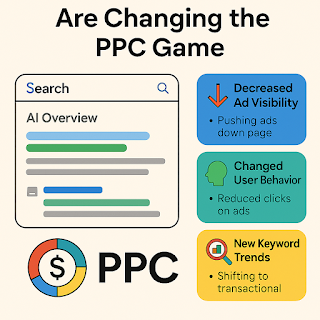
How Google AI Overviews Are Changing the PPC Game and How Google AI Overviews Are Revolutionizing the PPC Landscape. Discover how Google’s AI Overviews are transforming Pay-Per-Click (PPC) advertising strategies and what marketers need to know to adapt.

How Google AI Overviews Are Revolutionizing the PPC Landscape


Introduction

In May 2023, Google introduced a major shift in how users interact with its search engine: AI Overviews. These AI-generated summaries appear at the top of Search Engine Results Pages (SERPs), aiming to provide users with quick, comprehensive answers. While hailed as a breakthrough in user experience, AI Overviews have raised pressing questions in the digital marketing world—especially in Pay-Per-Click (PPC) advertising.

Marketers are now asking: Are AI Overviews helping or hurting ad visibility? Will users still click on ads if AI already answers their queries? And how can PPC strategies evolve to remain effective?

This article explores how Google AI Overviews are changing the PPC game and what advertisers need to know to stay ahead.

What Are Google AI Overviews?

Google AI Overviews are AI-generated summaries that appear prominently at the top of some search results. These overviews are part of Google's Search Generative Experience (SGE), which uses large language models (like those behind ChatGPT and Gemini) to synthesize information from multiple web pages and deliver a summarized answer to the user's query.

Key features:

  • AI-generated content at the top of SERPs
  • Linked sources from which the content is drawn
  • Dynamic, conversational, and context-aware responses
  • Often occupies space previously filled by ads or featured snippets

Why It Matters for PPC

PPC advertising, especially through Google Ads, relies on visibility. Ads that appear above or beside search results capture attention, drive clicks, and lead to conversions. AI Overviews, however, are now claiming premium real estate on the SERPs.

Here’s how this shift is impacting the PPC ecosystem:

1. Decreased Ad Visibility

AI Overviews often push traditional ad placements further down the page. This reduced visibility can mean:

  • Lower Click-Through Rates (CTR)
  • Higher Cost-Per-Click (CPC) due to increased competition for fewer visible spots
  • Reduced Quality Score if ad engagement drops

2. Changed User Behavior

Users are increasingly satisfied with AI-generated summaries and may not feel the need to click further. According to an early SGE usability report, users clicked on 40% fewer links when an AI Overview was present. This could mean:

  • Fewer opportunities for conversions
  • More brand invisibility unless marketers adapt

3. New Keyword Trends and Query Types

AI Overviews often appear for long-tail, informational queries rather than transactional ones. This changes the keyword landscape for PPC:

  • Informational keywords may be dominated by AI answers
  • Transactional keywords still retain high ad competitiveness
  • Marketers may need to redefine intent-based bidding strategies

How Marketers Are Adapting

Although AI Overviews present challenges, savvy marketers are finding ways to evolve.

1. Shifting Toward Bottom-of-Funnel Keywords

With AI Overviews handling many top-of-funnel (TOFU) questions, advertisers are:

  • Doubling down on bottom-of-funnel (BOFU) and high-intent keywords like “buy,” “discount,” “near me”
  • Using exact match and phrase match targeting to reach users ready to convert
  • Avoiding informational keywords that AI Overviews dominate

2. Optimizing for AI Inclusion

Interestingly, some brands are working to get featured in the AI Overviews themselves:

  • Creating high-quality, authoritative content
  • Answering common questions in a concise, trustworthy format
  • Implementing schema markup, FAQs, and clear headings This may not result in a direct PPC benefit but increases organic visibility, possibly supporting brand recognition alongside paid campaigns.

3. Using First-Party Data to Refine PPC

Since CTR data may be distorted by AI Overviews, marketers are increasingly turning to:

  • First-party data from CRMs, apps, and customer databases
  • Audience segmentation and remarketing based on behavior rather than search alone This improves targeting efficiency even when surface-level data like SERP clicks becomes less reliable.

Google's Mixed Messaging to Advertisers

Google has assured advertisers that AI Overviews won’t hurt PPC effectiveness, but the industry remains skeptical. Google Ads still brings in over 80% of Alphabet's revenue, so the company is unlikely to undermine it. However, some changes have already been noted:

  • Fewer ad slots appearing on some overview-heavy pages
  • Greater reliance on Performance Max and automation, making manual bidding less viable
  • More emphasis on ad relevance and landing page quality due to tighter competition

In a sense, Google's message is: If you want to survive in the AI era, lean into automation and AI-powered ad tools.

New Opportunities Emerging from the Shift

While many fear reduced visibility, AI Overviews may also create new opportunities for PPC advertisers:

1. Smarter Search Ads with AI Extensions

Google is integrating AI-generated assets into ads themselves. With responsive search ads (RSAs) and AI-written headlines, advertisers can:

  • Reach broader audiences with personalized content
  • Automatically adjust messaging based on AI's interpretation of user intent This enhances performance even on pages dominated by AI Overviews.

2. Visual Search and Shopping Integration

AI Overviews also include visual responses and product carousels. Google is encouraging advertisers to:

  • Use Product Listing Ads (PLAs)
  • Integrate with Merchant Center and Google Shopping
  • Submit high-quality images and product feeds These enhancements make ads more compelling in visually driven AI Overviews.

3. Voice and Conversational Commerce

As AI Overviews become more conversational, PPC may evolve into voice-driven advertising:

  • Voice assistants using Google Search will pull from both AI and ads
  • Smart brands are preparing voice-optimized copy
  • Conversational CTAs (“Buy now,” “Schedule a call”) are being tested in AI-powered ad formats

Case Studies: Brands Reacting to AI Overviews

Case Study 1: eCommerce Fashion Brand

A mid-sized fashion retailer noticed a 25% drop in CTR for generic product keywords after AI Overviews rolled out. They responded by:


  • Focusing PPC spend on branded and competitor keywords
  • Enhancing Shopping ads with high-res product imagery and reviews
  • Leveraging influencer-led content to appear in AI Overviews

Result: a 12% increase in conversion rate and better ROI.

Case Study 2: B2B SaaS Platform

A B2B software platform saw fewer leads from PPC for “best CRM software” queries. These now triggered AI Overviews. The company shifted strategy:

  • Ran LinkedIn ads targeting decision-makers
  • Created pillar blog content that appeared in AI Overviews
  • Focused PPC on “demo,” “pricing,” and “comparison” keywords

Outcome: Cost per lead dropped by 20%, despite lower search CTRs.

Future Outlook: Where Is PPC Heading?

The introduction of AI Overviews signals a shift toward intent-first search powered by artificial intelligence. PPC isn’t dead—it’s evolving.

Predictions:

  • AI-Powered PPC Tools will dominate: Google Ads will become more autonomous, with Performance Max and AI bidding as standard.
  • Visual and Conversational Ads will rise: Expect ads embedded within AI Overviews, voice search results, and image-driven content.
  • Greater Integration Between SEO and PPC: As AI controls visibility, brands will need a unified strategy that blends organic and paid efforts.

Conclusion

Google AI Overviews are undeniably changing the rules of the PPC game. For advertisers, this means less reliance on traditional keyword strategies and more focus on intent, audience behavior, and AI-powered tools. While ad visibility might shrink in some areas, new doors are opening—particularly for those who adapt quickly.

The key takeaway? Don't fight the AI shift—work with it. Marketers who align their strategies with AI behavior will find themselves not only surviving, but thriving in this new era of intelligent search.


How Google AI Overviews Are Revolutionizing the PPC Landscape

Developing and Building Agents with OpenAI and the Agents SDK


Developing and Building Agents with OpenAI and the Agents SDK


1. Introduction: Why “Agentic” AI?


Recent advances in large language models (LLMs) have enabled a shift from systems that simply answer questions to agents that can plan, make decisions, use APIs/tools, and coordinate multi-step workflows autonomously. OpenAI's Agents SDK, paired with the powerful Responses API, provides a streamlined foundation to build sophisticated, tool-equipped, autonomous agents.


These agentic AI systems are ideal for tasks such as:


  • Multi-step workflows (e.g., assisting with travel planning or performing a refund review).


  • Complex decision-making involving external data or APIs (e.g., summarizing web content and acting upon it).


  • Collaborative multi-agent coordination (e.g., triaging queries across specialist agents).


2. Core Components of the Agents SDK ⚙️


At its foundation, an OpenAI agent consists of three essential parts  :


1. Model

An LLM (e.g., GPT‑4o, GPT‑4o‑mini) that fuels reasoning and decision-making.


2. Tools

Encapsulated APIs or functions the agent can invoke—such as web search, file lookup, or custom Python functions.


3. Instructions & Guardrails

Prompts and policies guiding behavior, ensuring relevant, safe, and brand-aligned outputs.


Additional elements include:


  • Handoffs: Empower agents to delegate tasks to other agents.


  • Guardrails: Input-validation safety checks triggering fallbacks or guards.


  • Tracing: Runtime observability—tracking the sequence of tool calls, agents, handoffs, inputs/outputs.


3. Getting Started with a Simple Agent


  • Here’s a quick walkthrough using the Python SDK  :


from agents import Agent, Runner, WebSearchTool, FileSearchTool


# Step 1: Define the agent

agent = Agent(

    name="Research Assistant",

    instructions="Help the user by searching online and summarizing findings.",

    tools=[

        WebSearchTool(),

        FileSearchTool(max_num_results=5, vector_store_ids=["MY_STORE"]),

    ],

)


# Step 2: Launch the agent

async def main():

    result = await Runner.run(agent, "Find me the latest trends in electric vehicles.")

    print(result.final_output)


# Run asynchronously


Here:


WebSearchTool() and FileSearchTool() allow interaction with external data.


The agent loops until it decides it’s done.


SDK handles retries, output parsing, and loop control.


4. Richer Interactions with Custom Tools


You can expand an agent’s abilities with custom Python function‑based tools:


from agents import Agent, Runner, function_tool


@function_tool

def convert_currency(amount: float, from_currency: str, to_currency: str) -> float:

    """Converts an amount using current exchange rates."""

    # Implement exchange logic here

    ...


fx_agent = Agent(

    name="FX Agent",

    instructions="Convert currencies using the convert_currency tool",

    tools=[convert_currency],

)


The SDK auto-generates function schemas using Pydantic—everything is typed and validated.


5. Coordinating Specialists via Handoffs


When tasks span multiple domains, break them into specialist agents, with a triage agent managing the workflow.


Example: Tutor Agents


history_tutor = Agent(

    name="History Tutor",

    instructions="Answer historical questions clearly."

)

math_tutor = Agent(

    name="Math Tutor",

    instructions="Solve math problems, explaining each step."

)


triage = Agent(

    name="Triage Agent",

    instructions="Route subject-specific questions",

    handoffs=[history_tutor, math_tutor]

)


result = await Runner.run(triage, "What's the capital of France?")

print(result.final_output)


Triage agent determines which tutor is relevant.


Triage delegates the query.


Final output is returned seamlessly from the specialist agent.


6. Advanced Orchestration Patterns


6.1 Single-Agent with Many Tools

Start with one agent and gradually add tools. This reduces complexity and eases evaluation.


6.2 Manager Pattern

A central "manager" agent orchestrates specialist agents as tools  . It triggers other agents dynamically and synthesizes results.


6.3 Decentralized Pattern

Expert agents operate independently and pass control to each other through handoffs, without centralized orchestration  . Useful in customer support, triage workflows, or modular systems.


7. Ensuring Safety and Compliance with Guardrails


Guardrails enforce safety, scope alignment, and policy compliance.


Input Guardrail Example:


from agents import Agent, Runner, GuardrailFunctionOutput, input_guardrail

from pydantic import BaseModel


class HomeworkCheck(BaseModel):

    is_homework: bool

    reasoning: str


guard_agent = Agent(

    name="Homework Detector",

    instructions="Detect if the user asks for homework solutions.",

    output_type=HomeworkCheck

)


@input_guardrail

async def check_homework(ctx, agent, user_input):

    result = await Runner.run(guard_agent, user_input, context=ctx.context)

    return GuardrailFunctionOutput(

        output_info=result.final_output,

        tripwire_triggered=result.final_output.is_homework

    )


main_agent = Agent(

    name="Support Agent",

    instructions="Help users without doing their homework.",

    tools=[...],

    input_guardrails=[check_homework]

)


If the guardrail flags homework requests, the agent can refuse or escalate. Output guardrails follow a similar structure.


8. Supporting External and Custom LLM Models


Though optimized for OpenAI models, the SDK supports external LLM providers (e.g., Claude, Gemini, local models, Azure‑hosted GPT‑4) via OpenAI-compatible APIs.


Example with Gemini:


from agents import OpenAIChatCompletionsModel, Agent


client = AsyncOpenAI(base_url=GEMINI_URL, api_key=GOOGLE_API_KEY)

gem_model = OpenAIChatCompletionsModel(model="gemini-2.0-flash", openai_client=client)


agent = Agent(

    name="ResearchAgent",

    instructions="Use Gemini to find insights.",

    model=gem_model

)


9. Debugging, Tracing, and Observability


The SDK includes built-in tracing: each run logs agents triggered, tools called, handoffs, responses, and decision points. This grants powerful debugging capabilities  .

Visualization tools simplify bottleneck detection, performance tuning, and error analysis.


10. Putting It All Together: A Sample Mini-System


Here's a conceptual agent orchestration pipeline:


1. TriageAgent

Defines search_agent, math_agent, history_agent.


2. SearchAgent


Tools: WebSearchTool, FileSearchTool.


3. MathAgent + HistoryAgent


Specialist tools: calculators or knowledge base search.


4. Guardrails


Homework detector to prevent cheating.


5. Tracing setup for monitoring.


This modular design supports easy extension—add voice, more tools, external models.


11. Guardrails, Security & Compliance


  • Layered guardrails: use LLMs, regex checks, moderation API for content safety.
  • Human-in-loop for high-risk operations (e.g. refunds, account changes).

  • Authentication & access control around tool access and outputs.

  • Policy-based branching for edge-case handling (e.g. missing info).


12. Comparison: OpenAI Agents SDK vs Other Frameworks


The Agents SDK stands out by being:


  • Simple & Python‑native (no DSL).

  • Opinionated but extensible, with minimal primitives.

  • Fully traced & observable.

  • Provider-agnostic, supporting external LLMs.


Compared to frameworks like LangChain or AutoGPT:


  • Offers built-in tracing and guardrails.
  • Brings structured orchestration with handoffs.
  • The SDK’s code‑first design ensures quick iteration and lower learning curve.


13. Real-World Adoption & Ecosystem


  • OpenAI's 32‑page “Practical Guide to Building Agents” provides in-depth patterns and best practices.

  • Cloudflare paired the SDK with their own execution layer to provide persistence and scalability  .

  • MCP (Model Context Protocol) is now supported across OpenAI SDKs—unlocking plugin tool integrations and broader interoperability  .


14. Best Practices


1. Iterate progressively: start with a single agent, few tools, then expand.

2. Use guardrails early: catch misuse; refine instructions.

3. Specialize agents: naming, instructions, models, and toolsets per domain.

4. Use tracing to monitor usage, performance, and failures.

5. Adopt multi-model: mix larger models for reasoning and smaller for classification.

6. Decouple orchestration: define tools, agents, guardrails separately.

7. Plan for production: include auth, monitoring, rate limits.

8. Explore third-party runtimes: e.g., Cloudflare Durable Objects for persistence and scaling.


15. Challenges & Limitations


  • Guardrail setup can be complex—requires careful crafting of schemas and policies.

  • Multi-agent choreography introduces orchestration complexity and potential latency.

  • Cost & latency trade-offs: multi-agent workflows can be expensive, tune models accordingly.

  • Debugging subtle logic remains challenging even with tracing.

  • Dependency on external APIs can create brittleness without redundancy.

  • Security exposure exists if tools/scripts are not sandboxed or authentication is incomplete.


16. Future Trends & Open Questions

  • Stronger real‑time observability, such as live dashboards and distributed tracing.

  • Tool marketplaces and dynamic plug‑and‑play tool integration.

  • Open standards like MCP enabling flexible multi-model interoperability  .

  • Persistent, stateful agents via runtime layer integrations (e.g., Cloudflare).

  • Integrated Human‑in‑the‑Loop workflows, especially for critical tasks.

  • Adaptive multi‑agent architectures that evolve agents or strategies based on telemetry.


17. Conclusion


OpenAI’s Agents SDK offers a robust, streamlined path to build autonomous, multi-step, and tool-powered AI agents. By combining LLM reasoning, tool ecosystems, safety guardrails, and extensible orchestration, developers can build modular, robust, and production-ready systems.

Whether you're prototyping a smart assistant, automating workflows, or scaling domain-specific AI, agents offer a powerful paradigm. The SDK balances simplicity with flexibility, and serves as a strong building block for agentic applications of tomorrow.


18. Resources & Next Steps


📘 “A Practical Guide to Building Agents” by OpenAI  


📗 OpenAI Agents SDK docs (GitHub & Quickstart)  


🧰 Medium tutorials and community examples  


☁️ Cloudflare Agent integration overview  


🔌 Model Context Protocol insights  


Building agents is a rewarding journey—start small, follow best practices, and iterate! Happy building 🚀


Maps in Excel: Turning Data into Powerful Geographic Insights

  Maps in Excel: Turning Data into Powerful Geographic Insights Microsoft Excel has evolved far beyond being a simple spreadsheet tool. To...